
Shorelines, Borderlines, Disciplines & Battle Lines
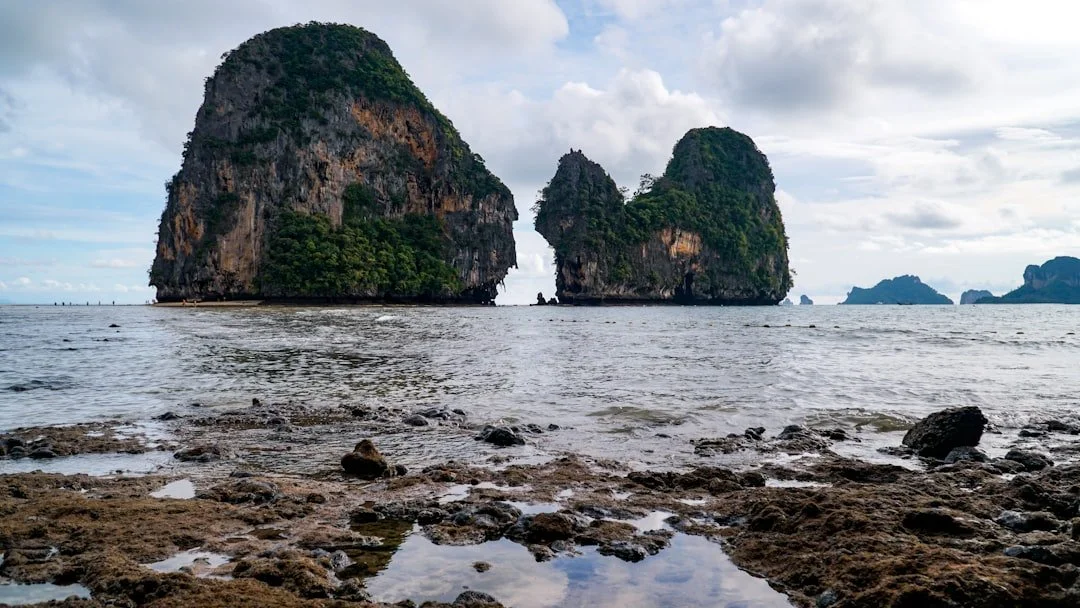
Rocky Islands, High Tide. Photo by David Gardiner on Unsplash
I. Shorelines
As I transition my work to Substack, I’m also transitioning how I talk about my work. I have realized that the way I teach people to listen, sense, and express themselves across racial and cultural divides is also what’s needed to connect across the rising tide of political issues as we stand firm on our positions like rocky islands.
It’s not the bridge that’s important.
              It’s the shoreline.
              The intersectional, intertidal zone.
I have always been drawn to shorelines, where the water meets the land. From the surface it looks like a stark border line. Sand, rocks and shorebirds on this side, water and sea life on the other. But wade in a few steps and you notice that it’s actually a substantial zone of overlapping water and land. And in the intertidal zone, alternately dry and submerged, an astonishing range of creatures can be found, living very different lives. Yet these lives nourish each other directly and indirectly in an interlocking web, as I learned in my Biology major days.
  What happens here between tidelines?
                 Cross-pollenation
                               Interaction
                 Cultural transmission
        Transformation
                  Multiple perspectives
                         New discoveries, new capacities
Surprises!
                  Change
                               Motion
                                             Cycles
There’s also a shoreline of sorts, a zone of exchange wherever disciplines overlap, cultures intersect or ways of life meet. I have always been drawn to those edges, from Psycho-biology to Dance Kinesiology to Arts-Academic integration to interracial and intercultural interactions. Recently I’ve begun thinking of political interactions in this way, as people increasingly queue up along political lines that obscure the fertile, intertidal zone.
        But we have drawn our lines in the sand.
        Our boundaries
        have become borderlines
        have become battle lines.
        We’re no longer barefoot children,
        free to run in and out of the waves.
        Sharp rocks are waiting in the sand to cut our feet,
        rip currents to carry us out to sea.
Yet, this zone is exactly where it’s possible to see the perspective of those on the other side. With practice, it’s possible to build on the unique assortment of experiences, lives and perspectives that exist here, to co-create a new, shared ecosystem.
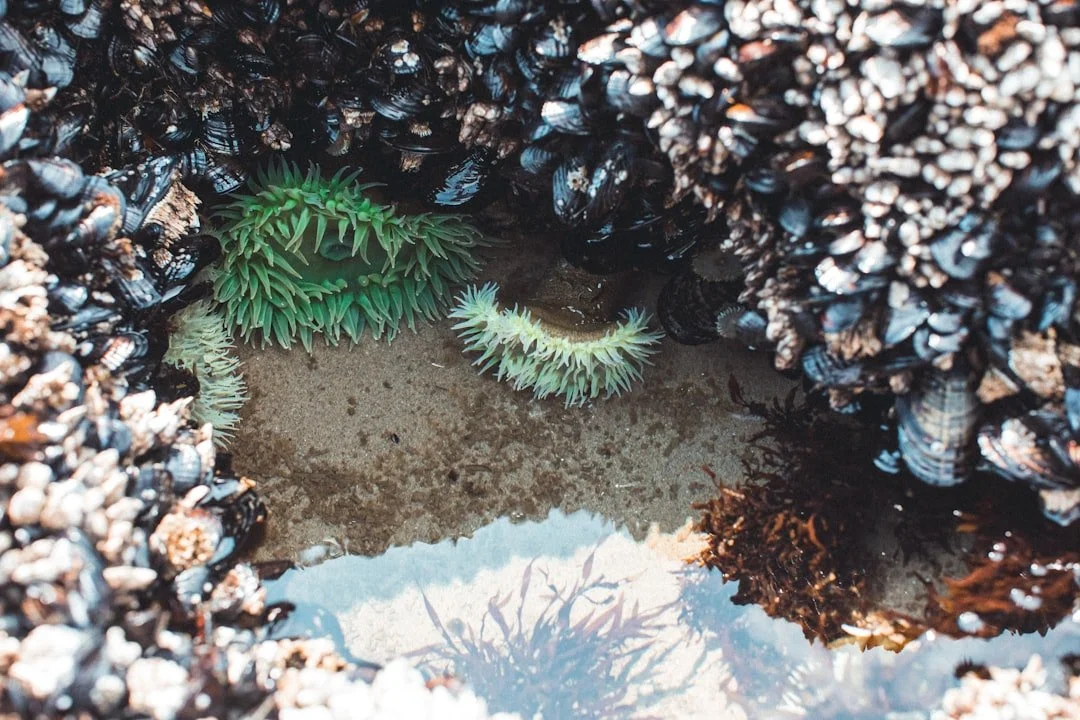
An astonishing range of creatures. . . Photo by Selena Morar on Unsplash
 So, yes, we do need to hold our hands across the shoreline
 Protecting each other amid the changing tides.
 We can encircle the sharp rocks to protect each other,
and hold fast so no one gets pulled out beyond their depth. 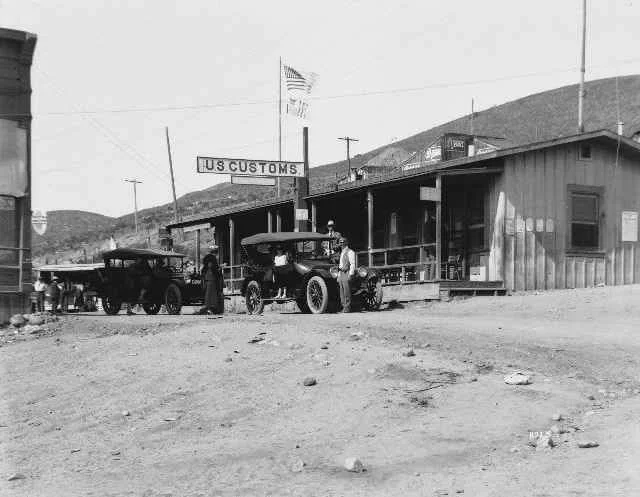
San Ysidro Border Station between Tijuana and San Diego, as it would have looked to my dad as a child. Photo: Postcard circa 1922, public domain
Looking back, my childhood taught me to be comfortable in the intertidal zone. Both my parents grew up on the US-Mexico border - my mom in El Paso, where she and her cousins would cross into Juarez frequently to shop or have dinner; and my dad in San Diego where as a child he would attend claiming races in Tijuana with his grandfather who owned a horse taxi service. Both grew up seeing Mexican people as just that: people, who owned restaurants, trained horses, and raised families just as people did north of the border.
“Other cultures are not failed attempts at being you; they are unique manifestations of the human spirit.”
That view of humanity shaped my experience growing up in the Santa Ynez Valley — a 4-mile radius that included a Danish village where traditional food was ordered from bilingual menus; an Old West town complete with swinging saloon doors; the reservation of the Santa Ynez Band of Chumash Indians; and a 19th-century Spanish mission that still served as the seat of local Latino culture. Don’t get me wrong — I didn’t grow up with any analysis of the ingrained power dynamics of all these groups. What I grew up with was an embodied experience of the truth of Wade Davis’ observation that “Other cultures are not failed attempts at being you; they are unique manifestations of the human spirit.”
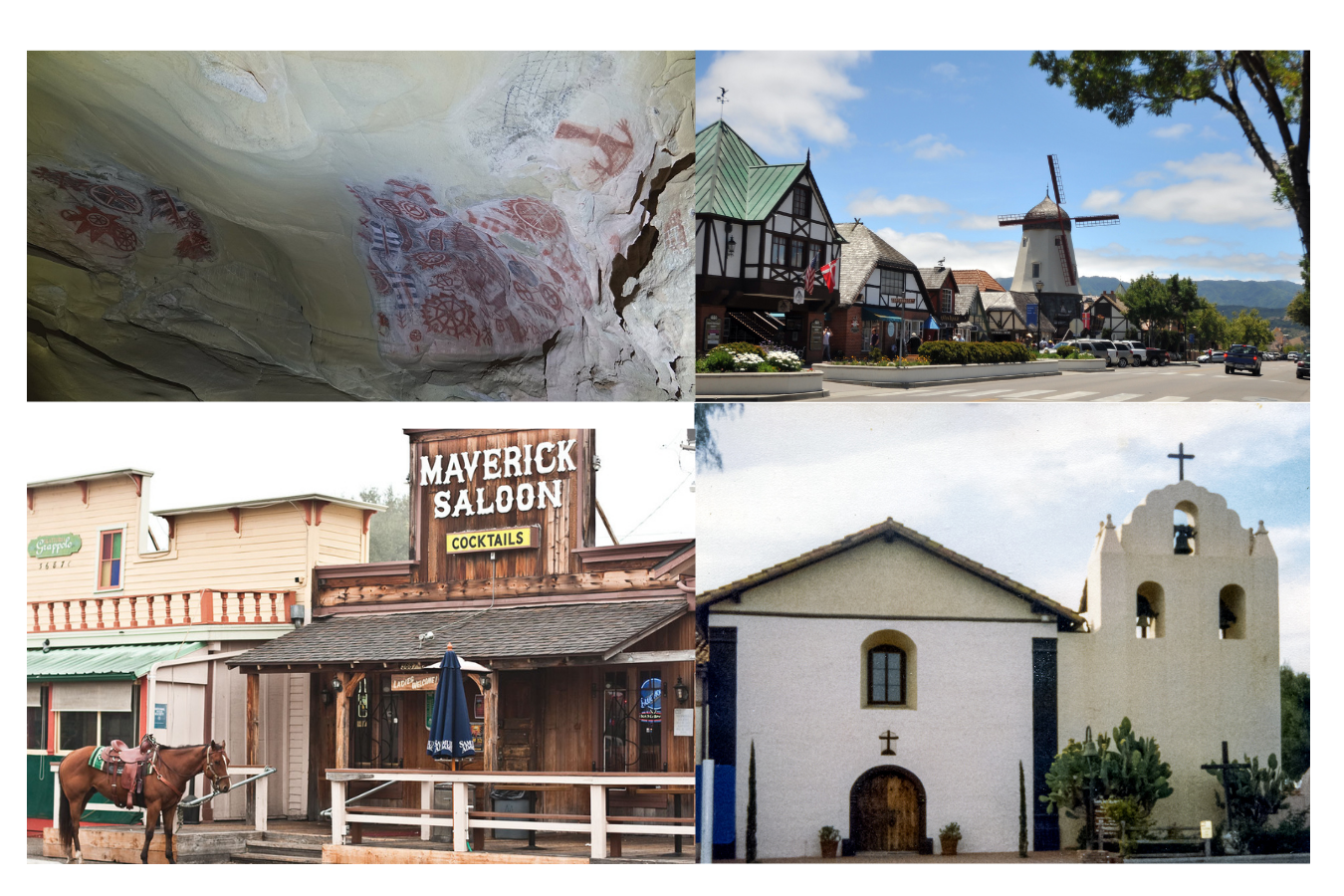
Clockwise from top L: Petroglyphs at Chumash Painted Cave (Doc Searls, CC BY 2.0); Danish architecture in Solvang (Edgy01/Dan Lindsay, CC BY-SA 3.0); Historic Spanish Mission Santa Inés (Celco85 derivative work: Georgfotoart, CC BY-SA 4.0).; The Maverick Saloon, Old Santa Ynez (Jimi Nelson Band); All CC licenses via Wikimedia Commons..
My school experience taught me about overlaps of socio-economics with culture as well. Through the first 9 years of my education, I changed schools roughly every two years. Each school had a distinct racial and class culture - from the Eurocentric Derville Academy with its strict French headmaster and uniform (including leather Mary Jane shoes), to the public College Elementary with Anglo and Latino kids, all in casual footwear. I remember coming home with the astonished observation, “Mom! They wear their tennies to school!” From there I moved to the White, affluent Laguna Blanca School. Its entitled culture revealed itself as my mom served homemade pancakes to my friends and I after my birthday sleepover, and one child informed her “I’m accustomed to being served from the left.” My mom later had to explain the arcane etiquette of upper class domestic service to me.
Because I had this repeated experience of needing to acculturate rapidly, I understood the concept of cultural norms in my bones long before I knew their technical name.
Returning to public middle school, I learned that the tough girls were now the popular ones, with the queen bee having legendarily beat up the popular boy and “now they’re going steady.” That was also the year that the school district allowed the Native American boys to keep their hair long if they wore a red headband to show that it was “cultural.” To my surprise, half of the kids with Spanish last names were Native. It felt like being called back into a parallel universe, with time passing rapidly while I was gone, new kings and queens taking power, new alliances forming and different customs arising. It was the same country with an altered culture that I needed to learn instantly. My sense of belonging depended on it.
In high school, the sub-cultures of gender presented themselves. I wound up in the formerly all-boys’ Dunn School as one of the first girls to integrate the program. There, boys outnumbered girls four to one. I learned to survive gross-out contests and tell dirty jokes; and more importantly how to speak up so I wouldn’t get talked over, and how to be friends with boys who weren’t boyfriends.
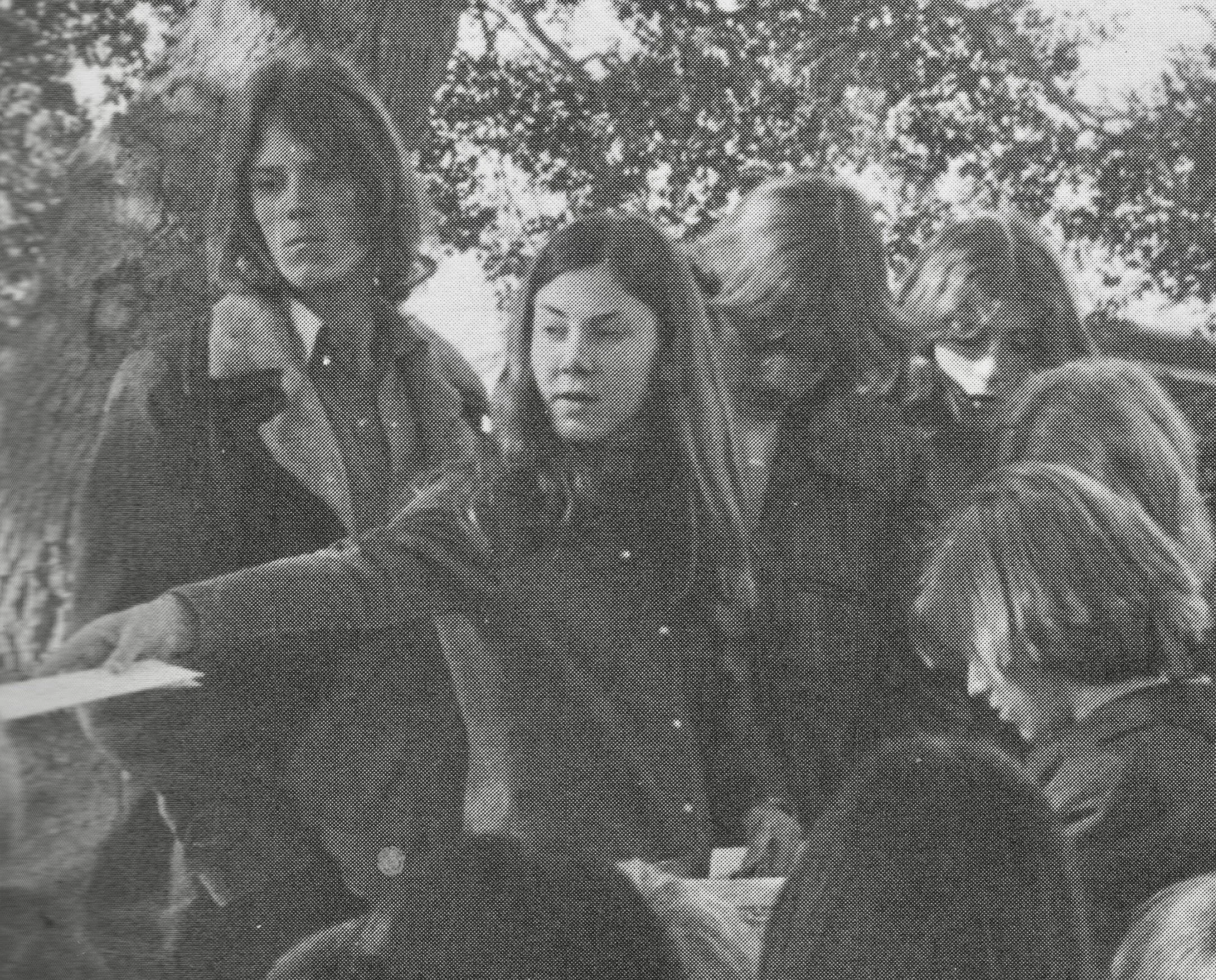
Me in a sea of boys. Dunn School mail call, circa 1975
At each one of these stops in my early education, I saw and felt the differences and learned to fit in. If I had stayed in any of these places for my entire K-12 career, I would have become accustomed to that particular culture and lost the ability to see their differences and the unwritten rules that created them. And yet, because I had this repeated experience of needing to acculturate rapidly, I understood the concept of cultural norms in my bones long before I knew their technical name.
III. Disciplines & Battle Lines
In college I lived the cultures of academic disciplines. One of my first classes was a small Freshman Seminar called “Categories and Disciplines.” I didn’t pick it - we all were assigned to one at random - but it turned out to be perfect for me. The basic idea was that humans tend to put knowledge into categories like “science” and “art” so that we can get our minds around them, and a certain amount of knowledge is generated by this process. Sometimes they split into even more focused sub-disciplines like “biology” and “chemistry.” But whenever disciplines bump into each other, there’s an explosion of knowledge and creativity as different perspectives are applied to each set of information. Think of what a surprise “biochemistry” must have been back in the day. Before it, biologists knew about living cells and chemists knew about molecules, but no one knew how they worked together. Nobody knew about DNA. When DNA sequencing in turn bumped into law and medicine, it revolutionized forensic evidence and genealogy so much that everyone knows that DNA evidence can prove people innocent or find their long lost cousins.
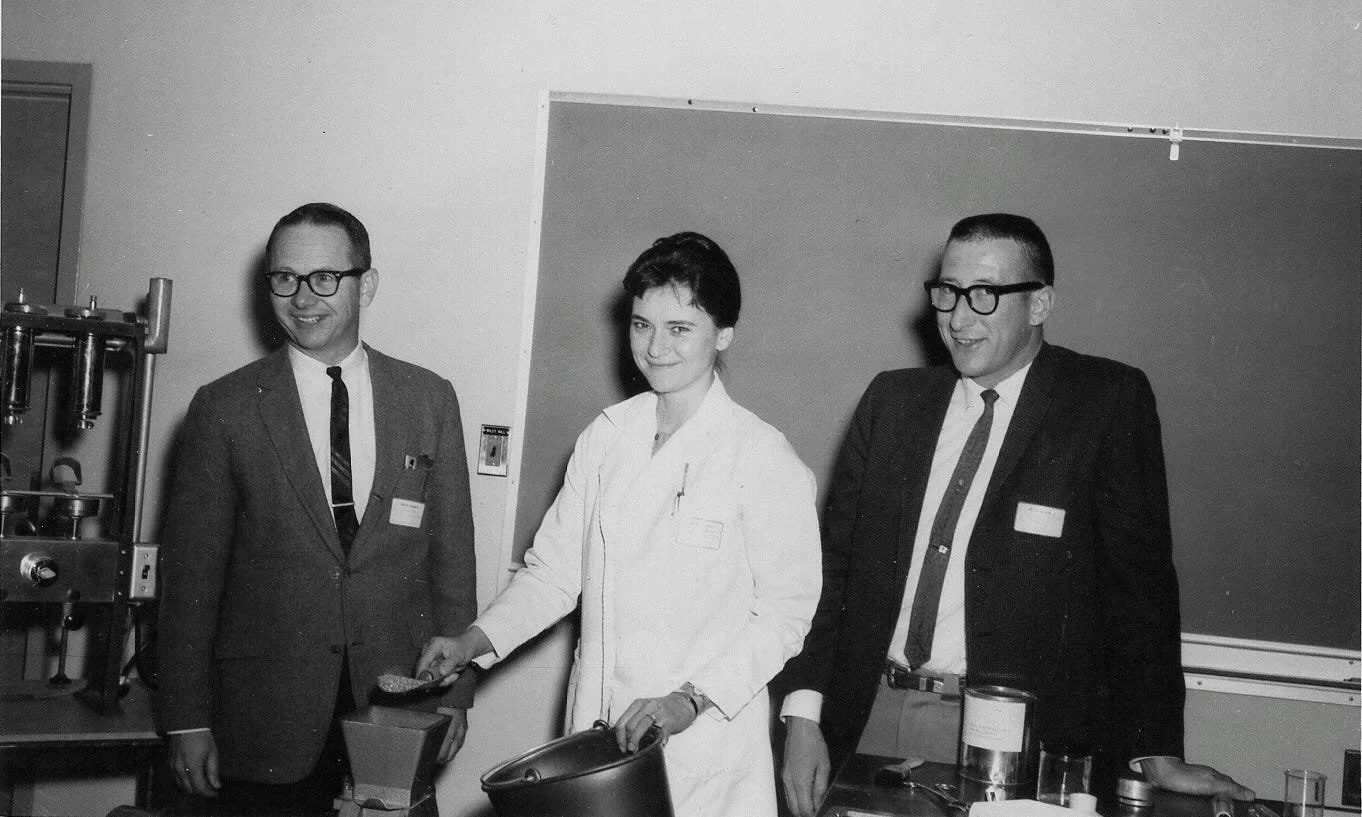
My dad and colleagues in the early days of applied biochemistry, circa 1962.
I’ve kept being drawn back into these interdisciplinary intersections. My MA thesis was in Dance Kinesiology - combining the science of human athletic performance with the art of dance. I later went on to teach in a school of Arts & Academics whose mission was to break down the siloes of education. Sure, we taught the standard disciplines: Math, Language Arts, Social Studies, Science - but also a required Integrated Academic Core, a project-based course collaboratively taught by teachers of all those plus the Visual and Performing Arts. I’ve spent years facilitating and coaching for interracial and intercultural skills, integrating head learning with embodied learning to deepen understanding. And now I’m including political identity to the list of cultures I help connect.
So how do I talk about my work? It took a lot of words to list my experience in all these overlapping, seemingly unrelated ways of being. So I’ll reach back into the arts for a metaphor, itself a bridge between ideas.
        My work is to understand what’s predictable and unpredictable about the tides,
               to have a sense of who’s likely to be present in this intertidal zone,
                   and to help us stay connected as we wade into it.
               Our borderlines need not become battle lines.